









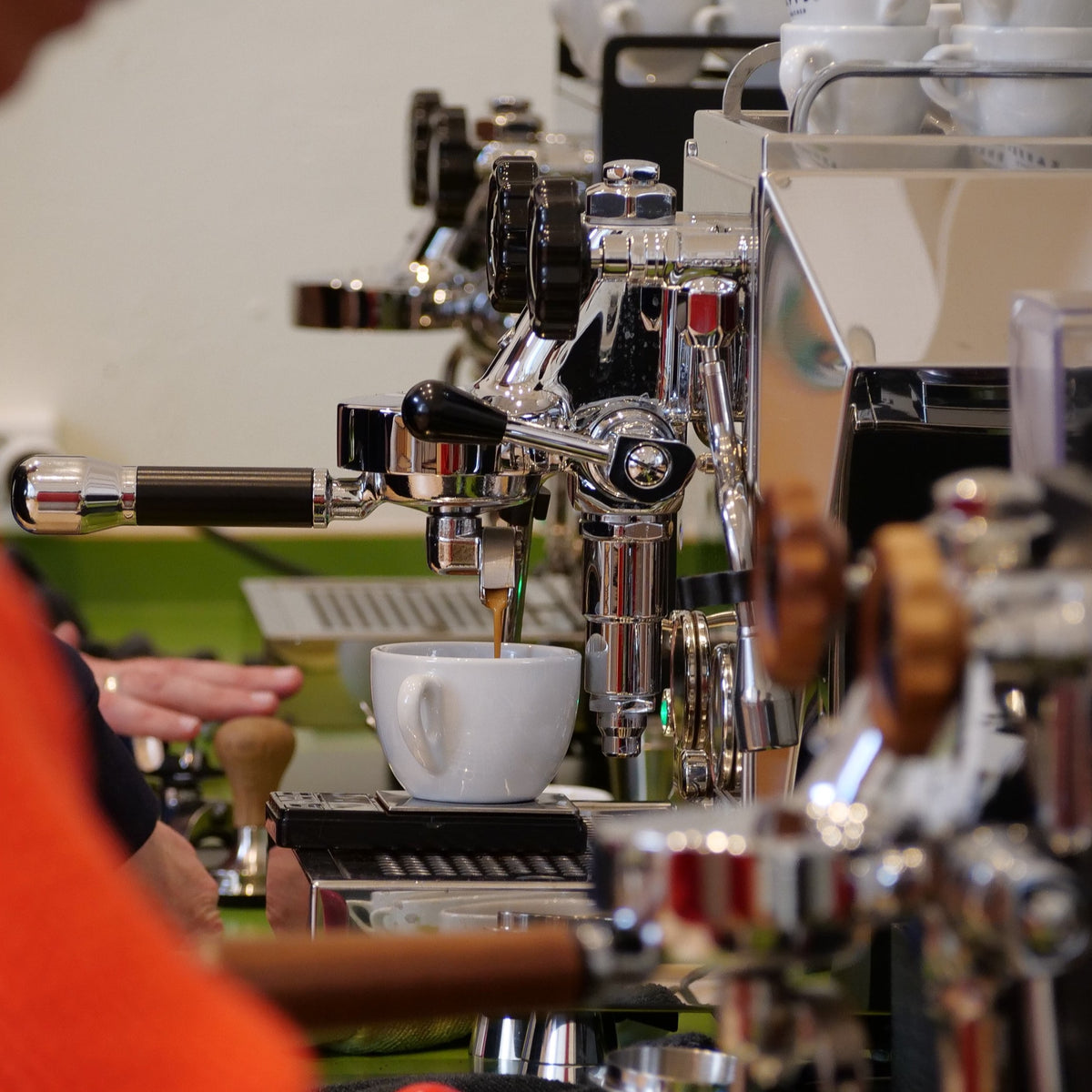





We already liked the original Lelit Elizabeth during our initial test. Now Lelit has raised the bar: the Elizabeth 3 is a dual boiler machine priced at €1,650 that controls pressure and flow in two distinct ways. Using the Pagaia—the small wooden paddle on the side—you can adjust flow manually during extraction. Additionally, you can store a custom 5-stage pressure profile on each of the two brew buttons. This allows for repeatable shots, a feature previously unavailable in this price bracket.
We tested the Elizabeth 3 according to our testing protocol 2.3.2 and simultaneously put the previous Elizabeth model through the exact same protocol. This allows for a direct side-by-side comparison. The key question: What does the new control system deliver in the cup, and what is the trade-off of the smaller brew boiler?
We did not purchase this machine. We received it prior to the official market launch so we could test it in time, and Lelit was unable to issue an invoice at that stage. This does not affect our testing methodology; as always, we evaluate independently and meticulously.
To preserve our independence, we donate the full retail value of €1,650 to the "Fazenda da Cachoeira" institute in Brazil. It supports cultural and educational initiatives in regenerative agriculture, facilitates knowledge transfer in partnership with universities, and leads social integration projects.
We previously reviewed the original Elizabeth in detail. You can find our Lelit Elizabeth review with updated measurements here, and we explain how the paddle mechanism works on the Victoria and Mara in our article on Lelit Pagaia.
What's New: Pressure Profiles, Pagaia Paddle, and a Smaller Brew Boiler
At first glance, the Elizabeth 3 looks identical to its predecessor. It still weighs 15 kg and measures 38 cm in width, 38 cm in height, and 36 cm in depth—nearly a cube. Under the hood, however, significant updates have taken place. The brew boiler has shrunk to 0.2 liters, the steam boiler remains at 0.6 liters, and the water reservoir holds 2.5 liters.
The main upgrade is the pump control system. Lelit regulates the vibration pump using Pulse Width Modulation (PWM), adjusting the power fed to the pump. Simultaneously, a pressure sensor measures the resistance created by the coffee puck. This technology builds on patents from Sage, whose parent group now owns Lelit. You can see the live results on the display: during extraction, the screen displays real-time pressure on the puck and the active profile.

Build Quality: Wood Details over Plastic, and Remarkably Quiet at 56 dB
During our review of the original Elizabeth, we criticized the plastic steam knob as cheap and unattractive, prompting many home baristas to craft custom wooden or 3D-printed knobs. That issue is now resolved. The steam knob, portafilter handle, tamper, and Pagaia paddle are made from matching wood, giving the machine a significantly more premium feel. The water tank lid now sits in a dedicated alignment groove, and rubber dampeners minimize internal rattling as expected from Lelit.
This attention to detail extends to acoustic performance. At 56 decibels, the Elizabeth 3 is exceptionally quiet. Particularly under a pressure profile, the pump hums softly rather than buzzing loudly. We rate build quality and acoustics at an 8.
A few minor compromises remain. The stainless steel casing is relatively thin and features a slightly sharp edge in one spot, while brushed stainless steel naturally attracts fingerprints. For this reason, Michel prefers the black version, as the powder coating feels higher quality and resists smudges. Black and white finishes cost an additional €50. Overall, we rate build quality at 8.
Pressure Profiles: Five Stages per Button
Each of the two brew buttons can store a distinct profile containing up to five stages. For every stage, you define the target pressure in 0.5 bar increments alongside the duration. No complex app is required; programming is done directly via the familiar Lelit display.
You don't need to use all five stages. If you set stage two to 30 seconds, stages three through five will simply be skipped, as no shot lasts that long. For daily use, a gentle pre-wetting phase followed by a 8.5, 9, or 7.5 bar main extraction is often plenty. Advanced users can program a lever-style profile across all five stages, ramping up to 9 bar and tapering down by 1 bar every few seconds.
The display uses the same interface Lelit has featured for years. It requires a little familiarity, but once you understand the menu logic, it becomes straightforward. Michel found profile programming intuitive. Additional settings include steam temperature adjustments, steam boiler disable toggles, and display brightness control.

Pagaia: Manual Real-Time Flow Control
Do you still need the manual paddle if the machine stores automated profiles? Yes and no. The Pagaia allows you to start the extraction directly from the side lever and react in real time to what you observe in the cup and on the pressure display. This is convenient when experimenting with new roaster recipes without saving a profile, or when you prefer a hands-on brewing experience.
The paddle is even more useful for saving shots that drift. In our test, a shot started flowing too quickly toward the end, despite a fine grind. By adjusting the Pagaia, we restricted the flow and brought the shot time to 22–23 seconds. At a fixed 9 bar, that shot would have gushed through in 19 seconds. Premium profiling machines like the Maro handle this automatically via Smart Profiling; here, you do it manually. One limitation: extraction must be initiated via the side lever. If started via a front button, you cannot switch over to paddle control mid-shot.
Whether both control methods are strictly necessary caused friendly debate in our team. One tester felt the electronic control alone would have sufficed if it lowered the price by €200. The other valued the paddle specifically as a rescue tool for single shots. Note that the paddle cannot be combined with an electronically saved profile.
Espresso Potential: Profiled Robusta with 18.5g Dose
For the first espresso shot, Michel chose an unexpected coffee: a pure washed Robusta from India called Bharath. Dosed at 18.5 g in a double basket, he applied a custom profile: 8 seconds at 3 bar for full puck saturation, followed by 8.5 bar for the remaining 17 seconds, yielding 45 g in the cup.
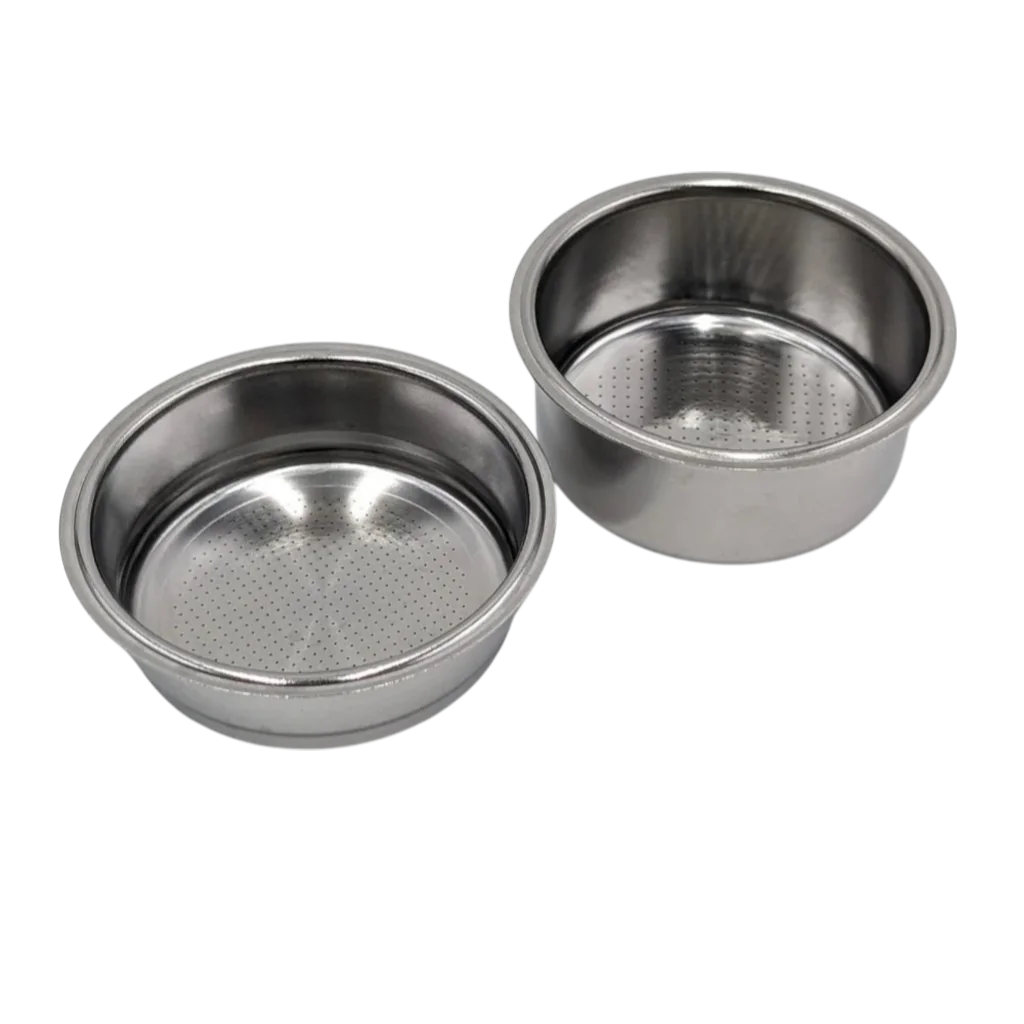
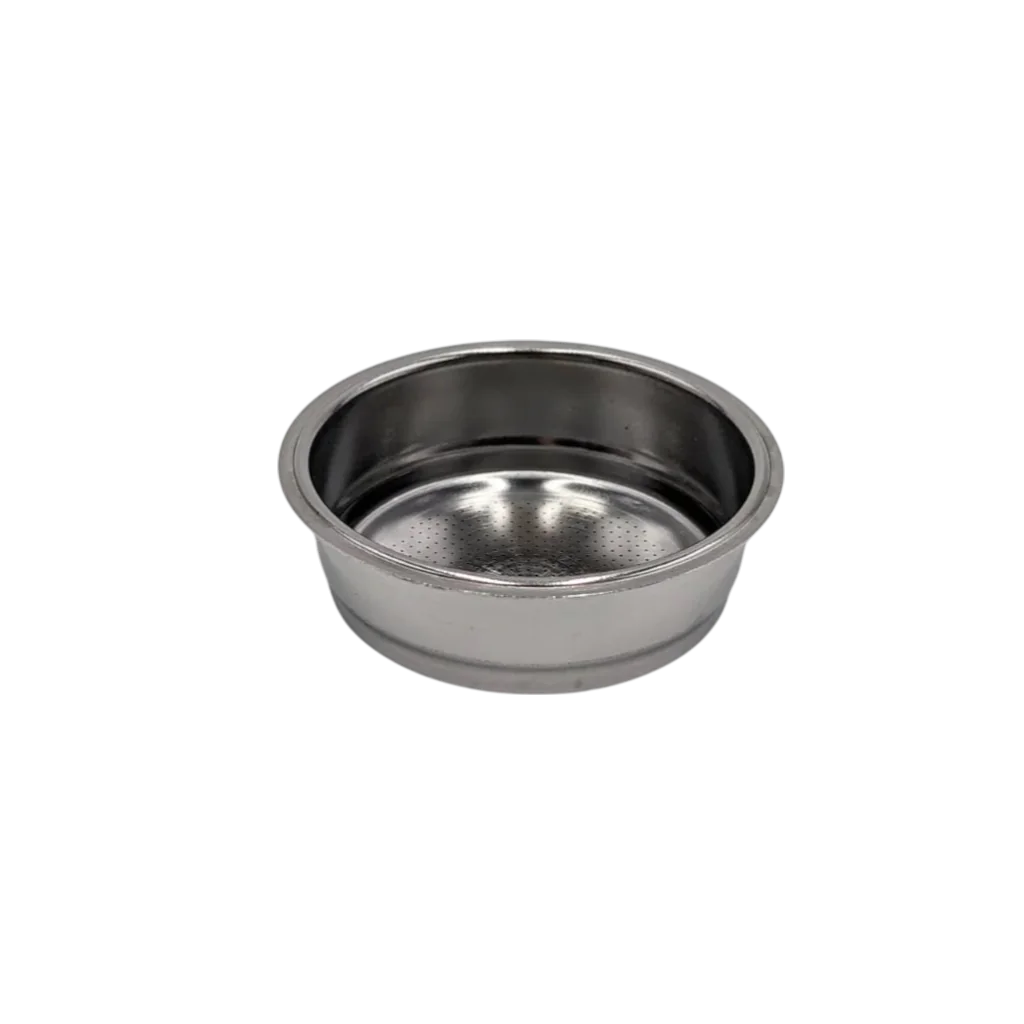
In the cup, the shot proved bold and intense, featuring dark, malty notes reminiscent of pumpernickel bread. The stock baskets are standard stamped baskets—decent, but not a highlight. To upgrade your setup, consider a straight-walled precision basket, such as our KM Professional Baskets.

Tested in Review: Bharath, Indian Espresso
Washed Robusta from Bharath Belliappa, featuring warm cocoa, marble cake, and a creamy mouthfeel.
Technically, the Elizabeth 3 offers immense potential. We rate the profile control hardware at 2.5 out of 3.5 points and the core hardware at 1.5 out of 2. You can dial in a dark Robusta just as effectively as a light specialty roast. Thermal behavior remains the main constraint, as explored next. Overall espresso potential scores 6.5 across back-to-back shots. Understanding its thermal recovery allows you to extract excellent shots consistently.
For foundational guidance on grind size and brew ratios, check out our guide on how to brew espresso.
Thermal Stability: 93.6 °C First Shot, 2 °C Drop Thereafter
Compared to its predecessor, the Elizabeth 3 exhibits lower thermal recovery under rapid successive shots, likely due to the smaller 0.2-liter brew boiler. While individual shot precision is high, consecutive shot stability requires understanding the machine's thermal recovery curve. We spent extensive testing hours analyzing its thermal performance.
Using a Scace device inside the portafilter at a 94 °C PID target, we executed the KM protocol (five double shots pulled at 1-minute intervals). The first shot after 20 minutes warm-up registered 93.6 °C—just 0.4 °C below the target setting. From shot three onward, temperature settled at 91.6–91.8 °C and held steady.
Our rating uses the 1-minute pause protocol baseline. Allowing a 2-minute recovery pause between shots improves stability significantly: all five shots land within a tight 0.9 °C window (91.4–92.3 °C). In a home setting, a 2-minute pause between drinks happens naturally while serving, purging, and grinding next doses using single-dosing workflow.
When making one or two drinks, thermal performance is solid. When serving guests back-to-back, allow a 2-minute pause between shots to keep group temperature stable across drinks.
| KM Protocol | Shot 1 | Shot 2 | Shot 3 | Shot 4 | Shot 5 | Spread |
|---|---|---|---|---|---|---|
| Original Elizabeth, 20m, 1m pause | 84.82 | 84.40 | 87.26 | 89.79 | 93.42 | 9.02 |
| Original Elizabeth, 25m, 1m pause | 90.71 | 92.52 | 93.60 | 94.01 | 93.64 | 3.30 |
| Elizabeth 3, 20m, 1m pause | 93.60 | 92.38 | 91.79 | 91.64 | 91.75 | 1.96 |
| Elizabeth 3, 20m, 2m pause | 92.27 | 92.10 | 92.10 | 91.44 | 91.35 | 0.92 |
All figures in °C, mean per shot (seconds 5 to 25), target PID setting 94 °C. The 2-minute pause row displays our home workflow recommendation.
Under the WBC protocol (14 rapid shots with concurrent milk steaming), performance drops are more evident. The Elizabeth 3 starts at 95 °C and drops below 90 °C toward the end, spanning a 5.5 °C window. In comparison, the original Elizabeth held shots 1 through 11 between 92.8 °C and 94.6 °C before tapering. High-volume catering is simply not the Elizabeth 3's target domain.
Overall thermal scoring reflects near-perfect shot number one, with deductions for successive shot temperature drop and WBC stress testing, yielding a 5.9 rating.
Heat-Up Time: 20 Minutes to True Stability
The Elizabeth 3 heats up slightly faster than its predecessor, though it is not a fast heater. Re-testing confirms warm-up times of 25 minutes for the original vs. 20 minutes for the Elizabeth 3 before achieving the described thermal performance. At 15 minutes, five test shots averaged only 88.4–89.2 °C on a 93 °C setting—consistent, but roughly 4 degrees too cool.
Some reviews suggest a 9-minute heat-up time, as claimed by Lelit. In his video review, Lance Hedrick recorded 89.6 °C on a single shot after 9 minutes (set to 90 °C). A single shot may indeed land near target as maximum heating power runs during the first eight minutes. However, our protocol evaluates multi-shot stability, which remains under-heated at the 15-minute mark.
The Elizabeth 3 requires 20 minutes to reach thorough thermal equilibrium. Power consumption tracking explains this curve: after 8 minutes, maximum power output steps down, slowing final group heating. Home baristas seeking instant readiness will find thick-film heaters or thermoblocks better suited. Heat-up time earns a 4. Once up to temperature, however, shot stability is impressive.
Milk Steaming: 300 ml in 30 Seconds to 60 °C
Steam performance improved noticeably despite keeping the same 0.6-liter steam boiler. The Elizabeth 3 steams faster and with higher pressure, heating 300 ml of cold milk from 8 °C to 60 °C in 30 seconds. This pace allows comfortable control while rolling microfoam. Purging yields roughly 4 ml of condensation, and the insulated cool-touch wand prevents milk from baking on. Steam quality earns a 7.8 rating. Find suitable milk pitchers for latte art in our shop.
Volumetrics: Timed Dosing instead of Flowmeter
The two brew buttons rely on timed dosing rather than flowmeters. True flowmeters capable of handling variable pressure profiles accurately add significant cost. When grind size is dialed in, timed dosing delivers reliable volumetric yields. We recommend pairing it with an espresso scale. Timed dosing scores a 3.
Power Consumption: 0.075 kWh in Espresso Mode
Our methodology is detailed in our power measurement guide. In single boiler espresso mode (steam boiler off), the Elizabeth 3 consumes just 0.075 kWh—a very efficient score for a dual boiler. With the steam boiler active, consumption rises to 0.154 kWh per espresso and 0.172 kWh per cappuccino.
The power chart reveals energy distribution. With steam boiler active, the machine draws full power (~990W) for roughly eight minutes, consuming 0.126 kWh. Thereafter, the PID pulses intermittently, adding 0.019 kWh across the final twelve preheat minutes. Without the steam boiler, full-power draw lasts only 2 minutes and 20 seconds, logging 0.068 kWh over 20 minutes—less than half.
Because both boilers are small, overall dual boiler energy draw remains modest despite the 20-minute preheat requirement. Standby power draw with the steam boiler running is 0.084 kWh/hour (0.045 kWh/hour without). For three drinks per day (morning, noon, evening), power on 20 minutes beforehand rather than leaving the unit idle all day. Energy efficiency scores an 8.
If you drink espresso exclusively, turn off the steam boiler. Warm-up time and initial shot energy draw drop by half. Note: in single-boiler mode at 94 °C PID, extraction temperatures landed roughly 2 °C lower than in dual-boiler mode.
Accessories & Ergonomics
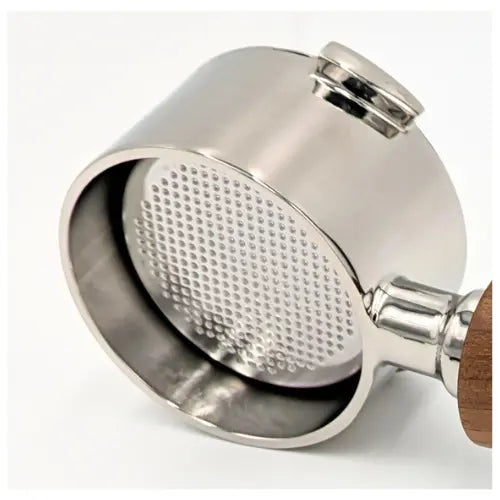
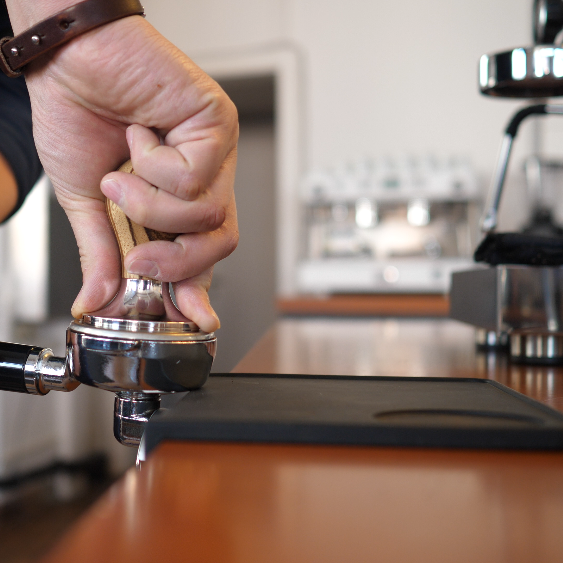
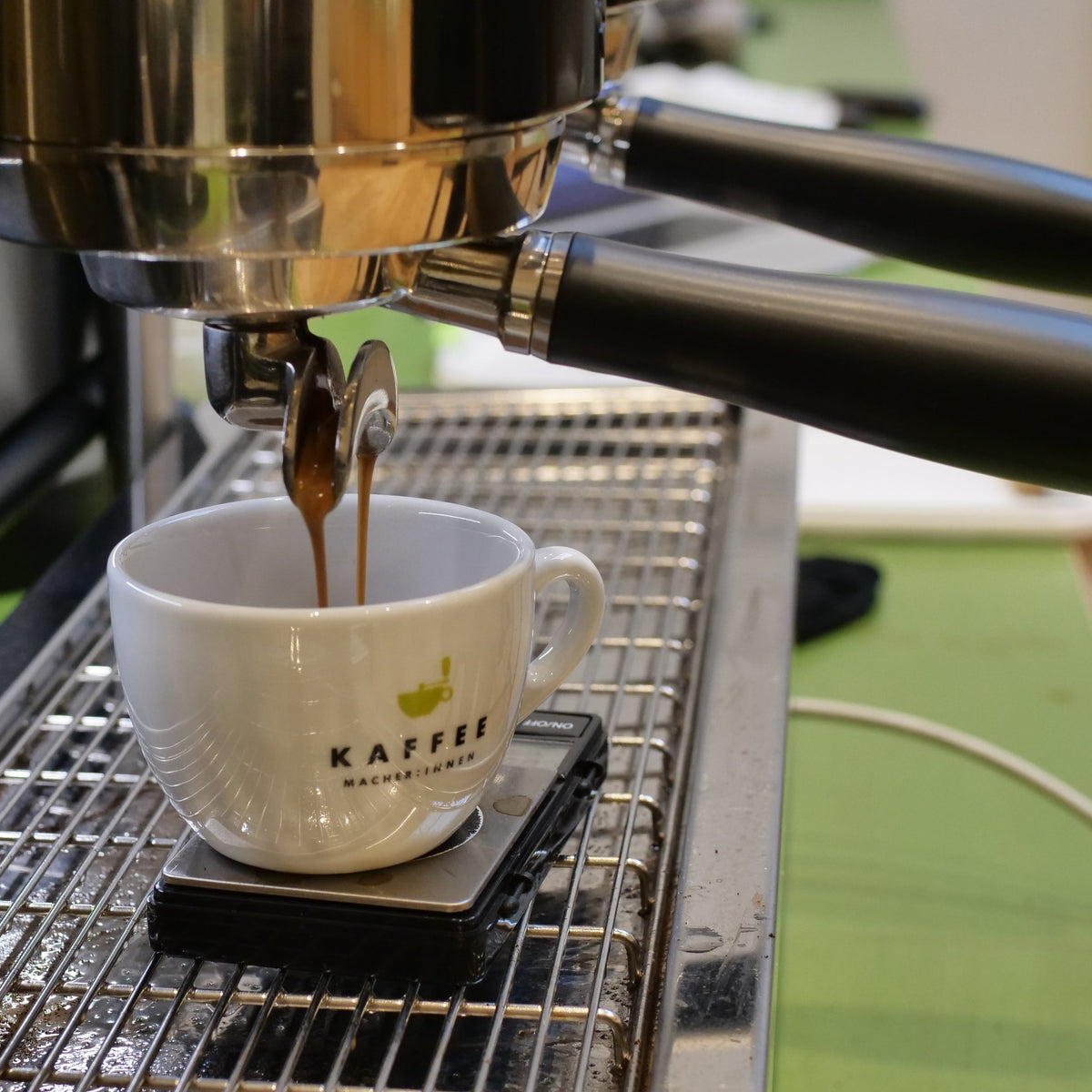
Lelit includes a solid metal tamper. Measuring 58.55 mm, it fits flush against basket walls with virtually zero side gap. Also included are a maintenance kit, blind filter, multiple basket sizes, and optional raised wooden feet. As typical for Lelit, only one double-spout portafilter is included. Spouts are positioned close together to fit narrower espresso cups. We appreciate Lelit's portafilter design, as coffee flows visibly down the front channel into the cup—a hazelnut-crema visual almost as satisfying as a bottomless portafilter. Accessories score an 8.
A water filter cartridge is included. It removes total hardness while leaving alkalinity, which slightly neutralizes flavor. For optimal coffee flavor, we don't recommend this specific filtration type, though it provides basic scale protection.
Daily workflow benefits from a large 1,200 ml drip tray and an easily removable water reservoir, though water level visibility is poor. The manual explains menu navigation clearly, though it lacks depth. Lelit manuals are generally brief despite hidden sub-menu features. Ergonomics score a 7.

Elizabeth 3 vs. Original Elizabeth?
The Elizabeth 3 is a fundamentally updated machine. It achieves shot-one thermal accuracy faster, steams with higher pressure, operates quieter, and adds custom pressure profiling. However, it loses thermal recovery performance over back-to-back shots compared to its predecessor. For home baristas pulling one or two drinks per session who want profiling tools, the Elizabeth 3 is a great choice. For high-throughput back-to-back shot volume, explore our dual boiler reviews featuring larger brew boilers.
Scorecard Summary
0 – 100
Scoring 61.7 out of 100 points, the Elizabeth 3 lands in the "Good / Standard" category. This score sounds more conservative than our hands-on experience suggests, for a specific reason: our protocol evaluates overall hardware features. Lower sub-scores for timed volumetrics, heat-up time, and commercial catering drag down the weighted average, while pressure profiling features influence only a segment of the total espresso score. Calculated price-to-performance sits at 5.1, slightly above market average.
Verdict: Pressure Profiling for €1,650
Would we recommend the Elizabeth 3 to a friend with a €1,650 budget? Michel answered immediately: "Absolutely, yes!" It remains a significant investment, but finding an electronic dual boiler with customizable, storable pressure profiling at this price point was previously impossible. Achieving this required adding custom flow control mods or investing in far costlier machinery like the Sanremo You.
Trade-offs are clear: a 20-minute preheat requirement, timed dosing rather than flowmeters, and a small brew boiler that loses temperature under rapid successive shots. Brushed stainless steel panels also attract smudges. However, home baristas allowing a 2-minute pause between drinks enjoy exceptional shot-one stability and tight temperature accuracy.
The Elizabeth 3 pulls great espresso, steams milk capably, and lets you experiment with pressure profiles. Alternatively, you can pull straight 9-bar shots with great results. Learn more about choosing the right setup in our Espresso Machine Buying Guide.
Technical Specifications Overview
| Feature | Lelit Elizabeth 3 |
|---|---|
| Price | approx. €1,650 (Stainless), approx. €1,700 (Black, White), MSRP Germany, October 2026 |
| Architecture | Dual Boiler with PID |
| Boiler Capacity | Brew boiler 0.2 l, Steam boiler 0.6 l |
| Pump Type | Vibration pump with PWM & pressure sensor |
| Profiling | 2 buttons with 5 pressure stages each, Pagaia side-paddle for manual flow control |
| Volumetrics | Timed dosing |
| Heat-Up Time | 20 minutes (measured) |
| Brew Temperature | 93.6 °C shot 1, 91.6–91.8 °C shots 3+ (94 °C PID target) |
| Power Consumption | 0.075 kWh Warm-up + Espresso (single boiler), 0.154 kWh (dual boiler); Idle 0.045 / 0.084 kWh per hour |
| Noise Level | 56 dB |
| Water Tank | 2.5 l |
| Drip Tray | 1.2 l |
| Dimensions (W × H × D) | 38 × 38 × 36 cm |
| Weight | 15 kg |
| Portafilter / Tamper | 58 mm / 58.55 mm |
We received this pre-release machine directly from Lelit prior to commercial availability. We donated its full retail value to a non-profit organization in Brazil. Pre-release delivery was arranged directly with Lelit during the Brussels trade show.


